
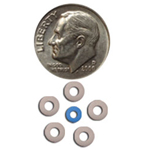
Separators are small elastics that fit snugly between certain teeth for a week or so to move them slightly so bands can be placed around them later. Separators can fall out on their own if enough space has already been created. To determine if it needs to be replaced, slip some dental floss between the teeth; if it gets stuck, that means the separators hasn’t created enough room and needs to be replaced prior to your banding appointment. Avoid sticky foods while wearing separators.
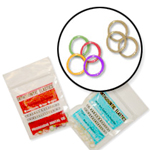
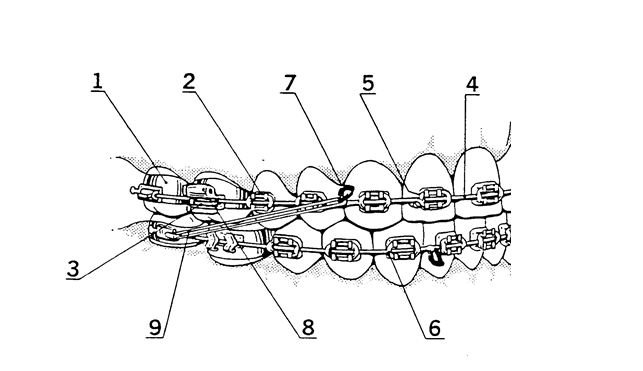
Rubber bands are small elastics that come in different sizes and are often hooked from the top teeth to the bottom teeth. Wearing elastics (or rubber bands) improves the fit of your upper and lower teeth. Hook rubber bands as instructed and remember that the rubber bands work far more efficiently if they're worn as prescribed.
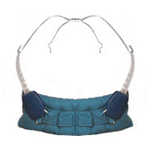
Headgear is often used to correct flared upper front teeth or an excessive overbite. This is done by placing pressure against the upper teeth and jaw, which would hold the teeth in position or help move them into better positions. The severity of the problem determines the length of time headgear needs to be worn. The key to success with your headgear appliance is consistency. Headgear must generally be worn at least fourteen hours per day, and if not, it must be made up the following day.
Headgear should never be worn while playing sports and should also be removed while eating or brushing your teeth.
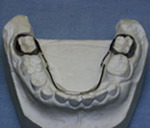
A glued in lower appliance to hold space. The lower primary molars are often larger in width than the permanent premolars that will replace them. So if a space maintainer is placed before those baby teeth fall out, that extra space can be preserved to alleviate a mild to moderate amount of crowding.
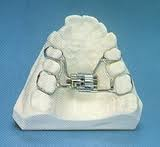
Attached to the upper molars through bonding or by cemented bands, the Rapid Palatal Expander is an orthodontic device used to create a wider space in the upper jaw. It is typically used when the upper jaw is too narrow for the lower jaw or when the upper teeth are crowded or blocked out of the dental arch.
When patients are still growing, their connective tissue between the left and right halves of their upper jaw is very responsive to expansion. By simply activating the expander through turning a screw in the center of the palatal expander, with a special key we provide, gradual outward pressure is placed on the left and right halves of the upper jaw. This pressure causes an increased amount of bone to grow between the right and left halves of the jaw, ultimately resulting in an increased width. For more information about expanders click here.
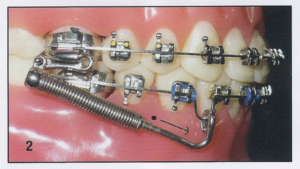
These are rods with a coil spring around it and are attached to the braces to help correct the bite. They move the upper teeth back and the lower teeth forward. For more information about Forsus springs click here.
